Tutorial 5 of 7
Plants, companions and where the data comes from
Beginner 6 min
Browse 122 vegetables, herbs, fruit and flowers with spacing, dates, sun and water needs, good and bad neighbours, and the guide each entry was compiled from.
The Plants view is Greenplot's plant library: 122 vegetables, herbs, fruit and flowers that grow in temperate gardens.
Find a plant
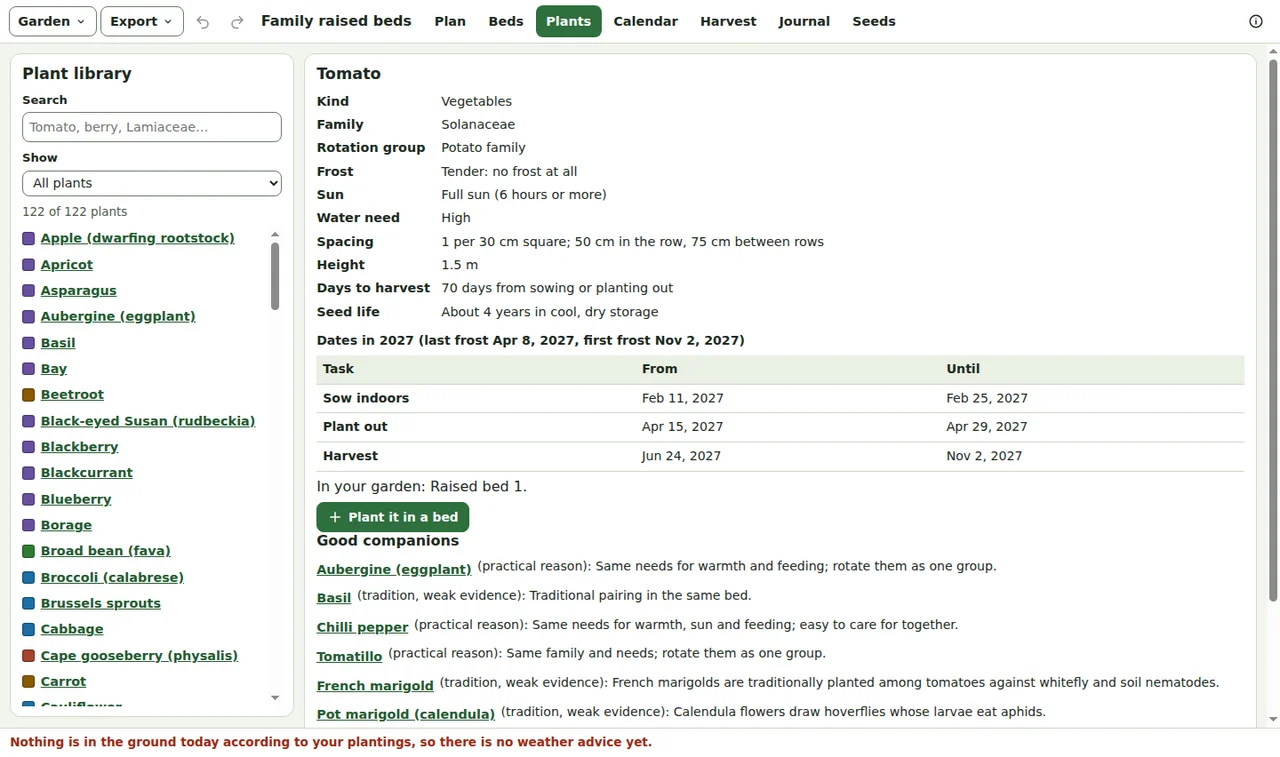
Type in Search (a name, or a family such as Lamiaceae) or choose a group under Show: vegetables, herbs, fruit or flowers. The colour square next to each name is its rotation group.
What each entry tells you
- Family and rotation group — used by the rotation checks.
- Frost — tender (no frost at all), half-hardy (takes a light frost) or hardy.
- Sun and water need — matched against the sun hours of your beds.
- Spacing — plants per 30 cm square, and distance in the row and between rows.
- Days to harvest for annuals; for perennials the years until the first real harvest.
- Seed life — how many years seed usually keeps in cool, dry storage.
- Dates for this season from your frost dates: sow indoors, plant out, sow outside, plant in autumn, harvest or flowering, and for fruit and perennials the pruning window and its kind (winter pruning of apples, summer pruning of plums and cherries, cutting fruited raspberry canes …).
Plant it in a bed picks the plant in the beds view, ready to place.
Companions — and how sure they are
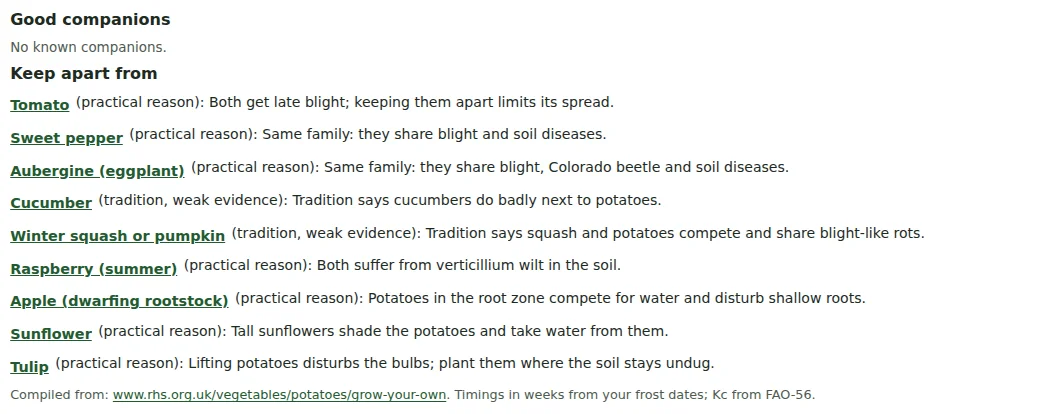
Under Good companions and Keep apart from every pair says why, and how well that reason is backed:
- Practical reason — a plain mechanism: potatoes and tomatoes share late blight, tall plants shade low ones, quick radishes are cleared before carrots need the space, beans climb sweetcorn.
- Tradition, weak evidence — gardening lore that many gardeners follow but trials rarely confirm, such as basil with tomatoes. Greenplot shows these pairs but never promises an effect.
Spacing, light, water and rotation matter far more than neighbours. The Companion Planting Checker tool checks a whole list of plants in one go.
Sources
Each plant links to the Royal Horticultural Society guide it was compiled from (Compiled from at the bottom of the entry). The data is written in our own words; timings are rules of thumb in weeks from your frost dates. Crop water use comes from the FAO-56 crop coefficients, and seed life from university extension tables. The 40 crops Hearth's garden planner knows are the same entries in both apps, so a tomato gets the same dates in Hearth and in Greenplot.
Ready to try it?