Tutorial 2 of 7
Sun and shade over the season
Beginner 6 min
See where the sun falls on your plot month by month, find out how many hours each bed gets, and put sun-loving plants where they will thrive.
Tomatoes, peppers and most fruit want six hours of direct sun or more; lettuce, spinach and many herbs cope with three to six. Greenplot works out where the sun falls on your plan, so you can match beds and plants before you sow.
Turn on the sun map
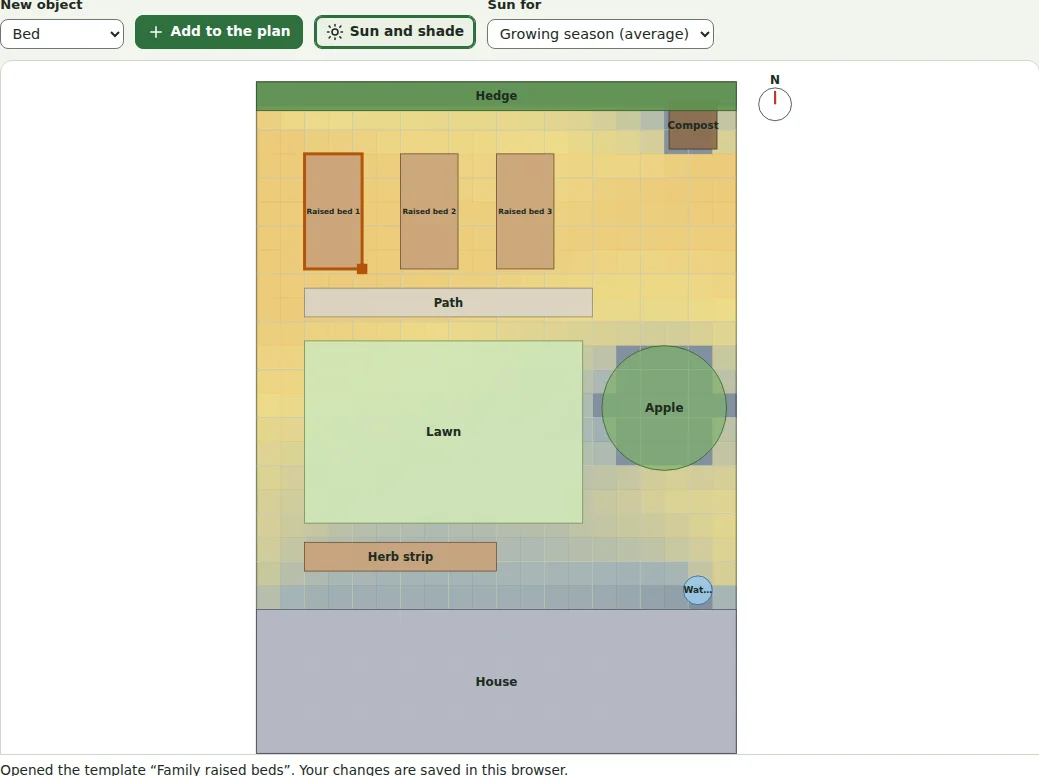
Set the place of the garden first (under Plot and place on the plan). Then press Sun and shade in the toolbar. The plot is coloured by the hours of direct sun a day: deep yellow is sunny, blue-grey is shade.
Sun for switches between the growing season (the average of April to September in the northern hemisphere) and each single month. In December the sun is low and even a fence throws a long shadow; in June the same spot may get sun all day.
How the sun hours are worked out
Greenplot computes the position of the sun every 20 minutes on the 21st of each month for your place, with the same solar equations as the weather station tools. For every half-metre square of the plot it checks whether a building, hedge, tree, shed or greenhouse stands between the square and the sun, using the height you gave the object and the direction the plan faces. Trees and shrubs count as round crowns, everything else as boxes.
Clouds are not included: the map shows direct sun on a clear day. Use it to compare places in your own garden, not as a promise of how many sunny hours a summer brings.
Sun per bed
Below the plot details a table lists every bed with its hours of sun and a class: full sun (6 hours or more), part sun (3 to 6 hours) or shade. The panel of a selected bed shows the same number.
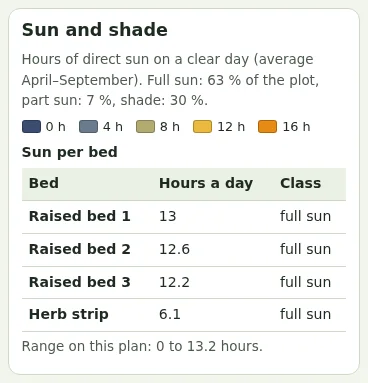
The beds view uses these hours too: a plant that wants more sun than its bed gets is flagged in the bed's Checks (for example Tomato wants more sun than the about 4 hours a day this bed gets). Move the plant, or move the bed on the plan and watch the check disappear.
Tips
- Give trees and hedges their real height: a 1.6 m hedge on the south side shades a narrow strip, a 4 m tree a whole bed.
- Turning the plan (top of the plan faces …) changes the whole map — check the north arrow if the shade looks wrong.
- A greenhouse casts shade like any building; its own bed counts as sunny, so you can plan tomatoes inside.
Ready to try it?